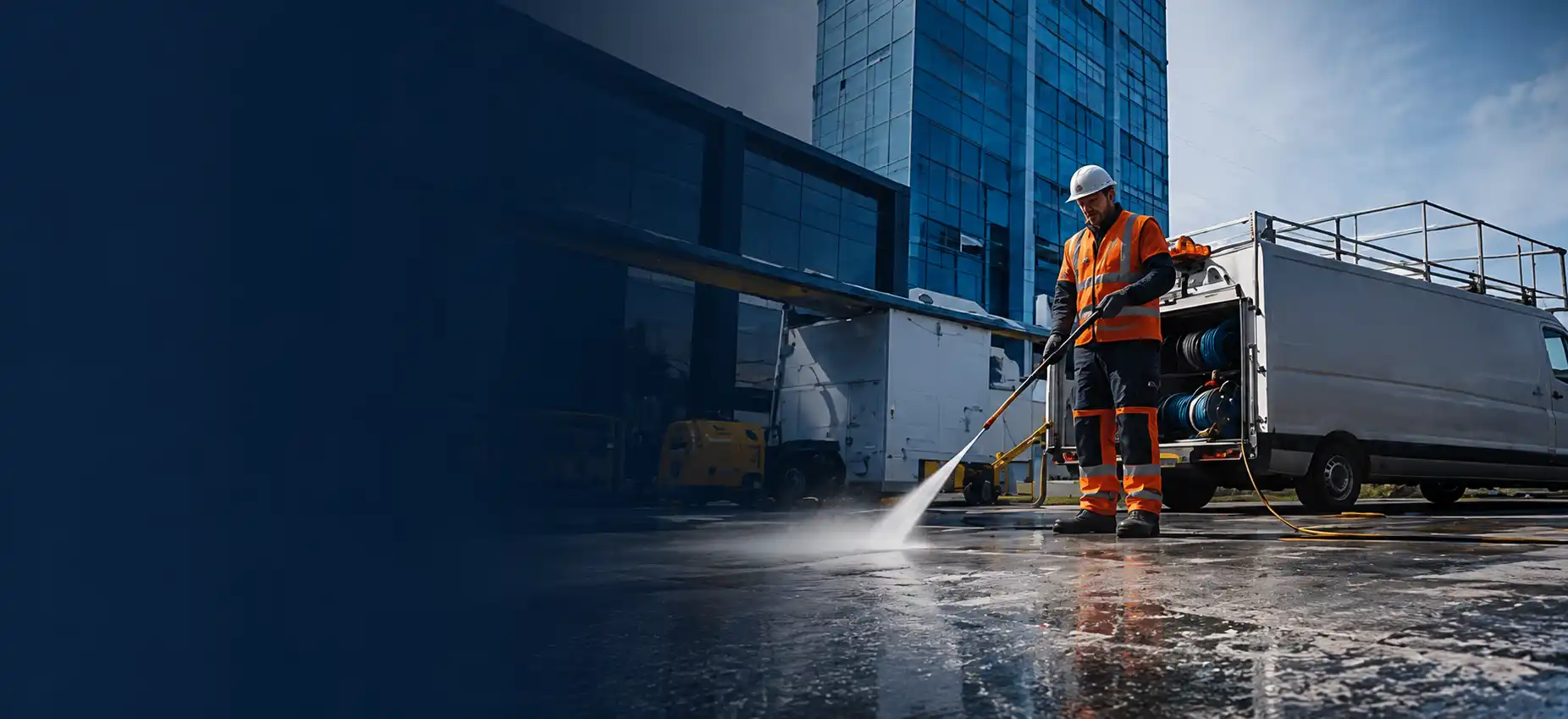
Exterior cleaning for mill buildings and a historic market centre, retail and public car parks, and industrial units along the River Calder, across Dewsbury and the WF12 and WF13 postcodes.
Dewsbury and the Heavy Woollen District
Dewsbury was at the centre of the heavy woollen trade, and many of the buildings that trade put up are still doing a job, which is what makes the cleaning here different from the motorway-corridor towns.
The Heavy Woollen District is the name for the cluster of towns around Dewsbury that made blankets, uniforms and recycled-wool cloth, and the building stock reflects it: tall, plain stone and brick mills on the riverside and along the railway, and some grander civic buildings in the centre. A good many of the mills are still in industrial use, as units for small manufacturers, storage and trade counters, and the rest are mixed-use or standing waiting for their next owner.
That makes Dewsbury a very practical place to clean. The work is mostly about shared yards, weathered brick and stone, and long rows of old gutters and downpipes rather than about the glazing and branded frontage of a retail destination. The town has a market, a retail centre and a ring road with its car parks, but the character of the work is set by the mills.
WF12–13
Dewsbury postcodes
Mill estate
Working buildings
Site visit first
Before any quote
On a working mill the visit is about who uses which yard, when it is empty, and what is stored against which wall.
Shared yards have several tenants, so we agree one programme with the landlord rather than patching it together.
Old gutters and downpipes are inspected before cleaning, because some will not tolerate being pushed hard.
Most of the work comes from the way these buildings are occupied now, not from how they were built.
A single mill can have a dozen occupiers sharing one yard and one set of drains. Cleaning it means one agreed method, a plan for vehicle movements, and a view on what each tenant is stored against the walls.
Mill walls have a century of soot and pigeon mess on them, and the mortar behind is often soft. The aim is a clean wall with the pointing still in it, so water pressure is set low and tested.
A mill roof has a very long gutter run, often at a height that needs a lift or high-reach equipment. Moss and silt in old cast-iron or lined gutters are the usual cause of damp on the floors below.
Many units serve walk-in trade customers. Forecourts, entrances and signage need to look cared for, and the cleaning is done out of counter hours.
The market and its surrounding streets take heavy footfall, food waste and spillage. They are cleaned before the first stalls arrive, using methods that suit the type of paving.
Sites along the River Calder and its canal sections need wash water controlled. Silt and detergent have to be kept out of surface drains, and some sites need it captured.
The town centre and the mill belt along the river.
Dewsbury is next to Batley, Wakefield and Huddersfield, and we work in all of them. Each has its own page.
Usually the landlord or managing agent, which is simplest, because the yard, drains and walls are shared. We agree one method and one programme with them and keep each tenant informed of when their area is affected.
It can if the pressure is wrong. We test a small area first, keep the pressure low on old mortar, and stop if the pointing starts to wash out. The result should be a clean wall with the joints intact.
Usually, with high-reach equipment or a lift, depending on access. A long roof is often done in sections, so a tenant's loading is not blocked for the whole day.
Whether it’s large-scale pressure washing, industrial cleaning or ongoing commercial maintenance, Jet Clean Commercial Services is ready to help.